
ASH WEDNESDAY | 46 Days Before Easter
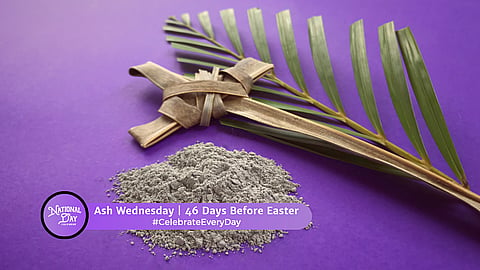
ASH WEDNESDAY
Ash Wednesday signals the beginning of Lenten season for Christians. It takes place 46 days before Easter and the day after Shrove Tuesday. During this religious celebration, worshippers receive ashes on their foreheads as a sign of mortality, grief for sins, and a commitment to spiritual renewal.
#AshWednesday
Ash Wednesday serves as a a day to "Remember that you are dust, and to dust you shall return." This holy holiday is a reminder of human mortality and the need for reconciliation with God.
Those who celebrate Ash Wednesday reflect, fast, repent and celebrate. A priest places ashes in the shape of a cross on the forehead. The ashes represent death and repentance and Ash Wednesday services focus on both. In many churches, the ashes are made from the palm branches that are burned from the previous Palm Sunday service. The ashes are applied following service or mass when the pastor or priest invites their congregation to receive the ashes.
Ash Wednesday is sometimes considered a solemn day that begins a time of meditation, reflection, self-examination, study, and contemplation. It's intended as a time Christians consider their own mortality and sinfulness in preparation for Easter.
HOW TO OBSERVE ASH WEDNESDAY
- Attend an Ash Wednesday service.
- Learn more about the history of Ash Wednesday.
- Share your #AshWednesday events and services.
ASH WEDNESDAY HISTORY
The use of ashes during spiritual occasions has ancient non-Christian roots. However, Ash Wednesday and the beliefs that accompany it, date back to the 6th century.
Ash Wednesday FAQ
Q. What kinds of ashes are used for the service?
A. The palms used during the previous year's Palm Sunday are usually burned and the ashes are kept and then blessed for use in Ash Wednesday services.
Q. Is this only a Catholic holiday?
A. No. Ash Wednesday services are performed in many churches of the Christian faith.
Q. When may I remove the ashes from my forehead?
A. There is no requirement to leave the ashes on the forehead though many will wear them until evening.