BLACK POETRY DAY
BLACK POETRY DAY
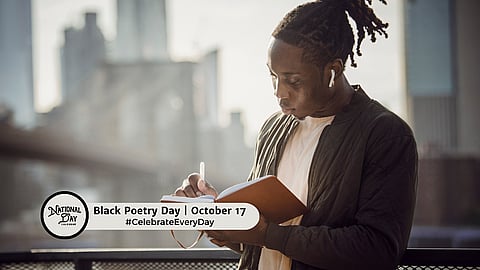
On October 17, Black Poetry Day celebrates the powerful voices, past and present, that have shaped and enriched the American cultural landscape. This day honors the vast contributions of Black poets and commemorates the birth of the man who started it all: Jupiter Hammon, the first Black writer to be published in the United States.
#BlackPoetryDay
Black poetry is a vital art form that captures the full spectrum of the human experience—documenting struggle, celebrating joy, challenging injustice, and exploring identity. This day encourages us to listen to these essential voices and recognize their profound impact on literature and society.
Jupiter Hammon is a foundational figure in African American literature. Born into slavery on October 17, 1711, he was fortunate to receive an education, which allowed him to learn to read and write. Using the library of the manor where he was enslaved, Hammon engaged with the literary world. In 1761, he published his poem, An Evening Thought: Salvation by Christ, with Penitential Cries. This publication marked a historic moment, making him the first published Black poet in the nation and paving the way for the generations of writers who would follow.
Take up a quiet spot at the library to read many of the talented black poets from around the world. Or find a poetry reading at a nearby bookstore, cultural or arts center like the Furious Flower Poetry Center at James Madison University. The first center of its kind in the United States, The Furious Flower's name is inspired by a poem written by former U.S. Poet Laureate Gwendolyn Brooks. They also have a growing collection of resources, offer workshops and so much more.
Explore Black Poets
Dive into the rich tapestry of Black poetry. Discover the works of legendary poets whose words continue to inspire and resonate today. Here are just a few to start with:
- Phillis Wheatley was the first published Black American female poet.
- Paul Laurence Dunbar was one of the first influential Black poets in American literature.
- Langston Hughes was a central figure in poetry during the Harlem Renaissance.
- Gwendolyn Brooks was the first Black poet to win the Pulitzer Prize for Poetry.
- Maya Angelou is an iconic poet, memoirist, and civil rights activist.
- Robert Hayden was the first Black Poet Laureate of the U.S.
- Audre Lorde is a writer whose work explored feminism, civil rights, and Black female identity.
- Amanda Gorman is a contemporary voice who gained international acclaim as a presidential inaugural poet.
HOW TO OBSERVE BLACK POETRY DAY
Host a poetry slam in your living room, front step, or in the break room. Encourage a black poet you know. Attend a poetry reading or share your own poetry. Pick up some poetry written by black poets. Explore the poetry of Jessie Redmon Fauset, Robert Hayden, Wanda Phips or Arna Bontemps. As you celebrate, be sure to use #BlackPoetryDay to post on social media.
BLACK POETRY DAY HISTORY
Black Poetry Day was established in 1985. The date was chosen to honor the birth of Jupiter Hammon, celebrating him as a pioneer and the "father of African American Literature."
Black Poetry FAQ
Q. Who are some notable Black poets?
A. Several Black poets come to mind. Langston Hughes, Maya Angelou, Alice Walker, James Baldwin, Toni Morrison, and Terrance Hayes are just a few of the talented poets who express their spirit through poetry.
Q. Have there been Black Poet Laureates?
A. Yes. Robert Hayden was the first Black Poet Laureate (at the time the title was Consultant in Poetry to the Library of Congress). Others include
Rita Dove, Gwendolyn Brooks, and Tracy K. Smith.