
NATIONAL CHOCOLATE DAY
NATIONAL CHOCOLATE DAY
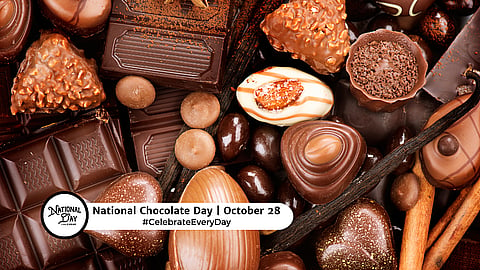
National Chocolate Day, on October 28th, recognizes one of the world's favorite tastes. While many specific chocolate-related holidays exist throughout the year, National Chocolate Day celebrates all things chocolate.
#NationalChocolateDay
Chocolate comes from the seed of the tropical Theobroma cacao tree, growing in Mexico, Central America, and Northern South America. Historians have documented the earliest cultivation of cacao seeds at around 1100 BC.
The intense, bitter taste of cocoa requires the bean to be fermented to develop the flavor. Once fermented, the beans are dried, cleaned, and roasted. After roasting, the shell is removed to produce cacao nibs. The cacao nibs are then ground into cocoa mass, which is pure chocolate in rough form. The cocoa mass is usually liquefied then molded with or without other ingredients. At this point in the process, it is called chocolate liquor. The chocolate liquor may then be processed into two components: cocoa solids and cocoa butter.
5 Types of Chocolate
- Unsweetened baking chocolate – cocoa solids and cocoa butter in varying proportions.
- Sweet chocolate – cocoa solids, cocoa butter or other fat and sugar.
- Milk chocolate – sweet chocolate with milk powder or condensed milk.
- White chocolate – cocoa butter, sugar, and milk but no cocoa solids.
- Ruby Chocolate - a special variety of cocoa beans that turn pink and offers a sweet and intensely fruity taste with a slight tartness.
Chocolate earns its day of honor by being America's favorite flavor, offering the perfect sensory experience. Many people report craving chocolate in states of stress, anxiety, or low mood. It's possible that eating chocolate serves as an effective coping mechanism because of the immediate comfort. Or, maybe it just tastes good!
HOW TO OBSERVE NATIONAL CHOCOLATE DAY
- Host a chocolate tasting! Purchase high-quality bars and taste them slowly. Pay attention to the complex flavors like fruit, spice, or earthiness and see how they pair with food and wine!
- Try a savory chocolate recipe by integrating chocolate into a main course. For example, dark chocolate is a key ingredient in Mole Poblano (a Mexican sauce often served over chicken or pork). The bitterness and richness adds incredible depth and complexity, not sweetness.
- Create a chocolate dipping station. Set up a chocolate fondue pot or melt high-quality chocolate and offer a variety of "dippers." Strawberries, banana slices, apple wedges, pretzels, potato chips, and bacon all make good choices.
- Make homemade chocolate truffles. All you need is ganache (heavy cream and melted chocolate) to form the center, chill, then roll the ganache balls toppings like cocoa powder, crushed nuts, or sea salt, or sprinkles.
- Eat chocolate for every meal by incorporating chocolate all day long! Add chocolate chips to your pancakes or use cocoa powder in a smoothie.
- Share your chocolate adventures on social media using the hashtag #NationalChocolateDay.
NATIONAL CHOCOLATE DAY HISTORY
The official originator of National Chocolate Day on October 28th is the National Confectioners Association (NCA), a U.S. trade organization.
Chocolate FAQ
Q. Besides white chocolate, how is cocoa butter used?
A. Cocoa butter is the processed fat from the cocoa bean. It is a necessary ingredient in both milk and white chocolate. However, skincare produces also include cocoa butter. Its fatty acids are touted as good for your skin.
Q. Why do I need to temper my chocolate?
A. If you're making candy or chocolate-covered treats, tempering chocolate stabilizes it and creates a shiny, easy to use chocolate. The process requires the chocolate to be heated and then cooled and then reheated. It may seem time consuming, but for the prettiest creations, it's also the best process.
Q. Which chocolate holidays are coming up?
A. The calendar loves chocolate holidays. Chocolate celebrations coming up include:
- Bittersweet Chocolate With Almonds Day
- Chocolate Covered Anything Day
- Chocolate Candy Day
Q. Does chocolate make a good gift?
A. Yes! You can give a variety of chocolate, too. That way you're more likely to give someone their favorite kind. However, please remember to not give dark or milk chocolate to someone who is allergic to it. White chocolate is the safer option.