
NATIONAL FIRE PUP DAY
NATIONAL FIRE PUP DAY
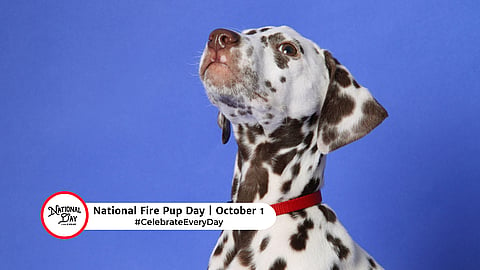
On October 1st, National Fire Pup Day honors the brave canines who have served—and continue to serve—alongside our firefighters. From the iconic spotted Dalmatian running beside a horse-drawn engine to the highly trained nose of a modern arson dog, these four-legged heroes hold a special place in the firehouse and in our hearts.
#NationalFirePupDay
While the Dalmatian's origin is unknown, their use in firehouses began during the 1700s. Trained as a carriage dog, the Dalmatian's agility transferred quickly to horse-drawn fire engines. Even though Dalmatians weren't the only dogs fit for carriage work, they were the ones who mostly filled the role of fire dogs. They were also easily identified by their spotted and speckled coats.
In the days of the horse-drawn fire carts, they provided a valuable service, having a natural affinity to horses. The Dalmatian's duty was to run alongside the horses. They ran in front of or beneath the wagon axles clearing the way.
Long after the red engines replaced horse-drawn wagons, the Dalmatian remains a recognizable tradition in fire stations across the country. These energetic firehouse mascots serve to educate the public about fire safety. They also represent past fire pups in honor of their heroism.
Today, the role of the fire pup has evolved far beyond that of a carriage dog. Modern fire canines are highly skilled professionals trained for critical tasks. Three types of fire pups are:
- Arson Detection Dogs are trained to sniff out minute traces of flammable liquids. Their incredible noses can pinpoint the origin of a suspicious fire, making them invaluable partners to fire investigators.
- Search and Rescue (SAR) Dogs are deployed after tragic instances to find survivors who may be trapped under debris. Their ability to navigate dangerous terrain and detect human scent is nothing short of heroic.
- Therapy and Crisis Response Dog are trained to provide comfort to victims and reduce stress for first responders after a traumatic event.
6 WAYS TO SUPPORT NATIONAL FIRE PUP DAY
Show your appreciation for these canine heroes this National Fire Pup Day:
- Learn About a Famous Fire Pup like "Smoky," a tiny Yorkshire Terrier who became a hero in WWII. Share their story with your family or online.
- Visit Your Local Firehouse to learn about fire safety and maybe even meet a pup!
- Support a Canine Organization by donating to organizations that train and care for arson detection, search and rescue, or crisis response dogs.
- Teach Fire Safety by using today to review your family's fire escape plan, create a fire safety plan, and test your smoke alarms.
- Share on Social Media by posting photos, facts, or stories about these incredible canines using the hashtag #NationalFirePupDay.
- Share your support, photos, and safety tips on social media using the hashtag #NationalFirePupDay.
NATIONAL FIRE PUP DAY HISTORY
National Day Calendar® continues researching the origin of this fire-fighting heritage day.
Fire Pub FAQ
Q. What other kinds of jobs can dogs do?
A. A working dog is nothing new. Dogs have been aiding humans for centuries. Some of their first jobs were aiding humans in hunting and war. In the modern world, dogs still play vital roles in society.
- Search and Rescue - Those canine ears and noses detect the scent of a missing person and hear sounds human ears can't. Their ability to find a missing person is invaluable to search teams.
- Herding - Not only are these dogs trained to herd livestock but some breeds are also born with an innate ability to bring a flock together.
- Service - Dogs trained to help those with disabilities also help people to live more independent lives. They aid people with a variety of conditions including blindness and seizures.
- Therapy - Many dogs just know how to brighten someone's day. Therapy dogs are trained to be calm and attentive so they can visit people who live alone or in nursing homes. Their visits reduce stress and improve daily life.
- Detection - The powerful noses of some breeds mean they can be trained to detect drugs, bombs or even cancer.
Q. Are all Dalmatians deaf?
A. No. However, the breed is prone to deafness in either one or both ears. The Dalmatian isn't the only breed with reports of deafness. Though dogs with white pigmentation tend to have a high frequency of congenital deafness.