NATIONAL HIV VACCINE AWARENESS DAY
NATIONAL HIV VACCINE AWARENESS DAY
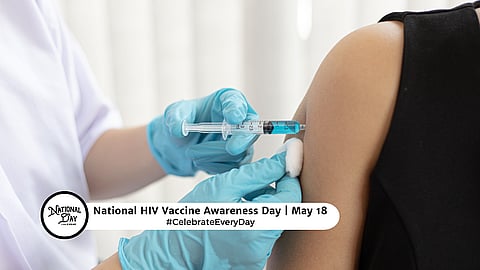
Each year on May 18, National HIV Vaccine Awareness Day recognizes thousands of volunteers, community members, health professionals, and scientists who work together to find a safe and effective HIV vaccine.
#HIVVaccineAwarenessDay
Over 30 years have passed since HIV was identified as the cause of AIDS. However, researchers continue in their mission to develop a vaccine. Treatments and preventative measures exist to help those impacted by HIV and AIDS. However, a viable vaccine is still the only means to prevent its spread. Today, we need to spread the word to promote awareness and education concerning HIV vaccine research.
Nearly 1 out of 7 people are living with HIV today. That means nearly 37.9 million people around the world are living with HIV/AIDS. Additionally, the virus seems to spread the most in the poorest and most underprivileged communities in the world. Most importantly, lack of educational information, preventative measures and medical treatment are the leading causes of HIV spreading.
There are vaccines for many diseases caused for bacteria and viruses. Unfortunately, there is no treatment for those infected by HIV. Scientists are continuously working on a way to develop an effective treatment. Multiple organizations are working together to find a successful treatment. Clinical trials and studies are constantly occurring around the world in hopes to combat the virus.
The National Institute of Allergy and Infectious Diseases considered the HIV virus a global pandemic. The organization's commitment to deliver prevention options for diverse populations worldwide is establishing progress, but more work needs to be done.
SUPPORTING NATIONAL HIV VACCINE AWARENESS DAY
Get tested.
Support someone who has HIV/AIDS.
Hold a fundraiser.
Encourage treatment.
Listen to someone who is dealing with HIV/AIDS.
Donate to a local organization that assists people with the virus.
Share #HIVVaccineAwarenessDay and #HVAD to show support.
NATIONAL HIV VACCINE AWARENESS DAY HISTORY
Organized by the National Institute of Health’s National Institute of Allergy and Infectious Diseases, this day is also a day to educate our communities about the importance of preventive HIV vaccine research. Community activities and media events are being held around the country in recognition of the observance.
1981: The first published report of HIV/AIDS appears in the Center and Disease Control (CDC) and Prevention Morbidity and Mortality Weekly Report appears.
1982: The CDC identifies the virus as acquired immunodeficiency syndrome (AIDS).
1984: The CDC identifies the cause of the HIV/AIDS virus.
1985: The CDC establishes a test to help identify the HIV/AIDS.
1987: The CDC begins treatment with the antiretroviral drug azidothymidine (AZT), otherwise known as d zidovudine.
1990: Two new antiretroviral drugs are introduced and tested showing the combination reduces the amount of virus found in the body.
2000: The International AIDS Conference is held in Durban, South Africa.
2001: The CDC announces they have a new strategic plan to combat the spread of HIV/AIDS.
2003: An initiative is set in place to reduce the number of infected HIV/AIDS diagnosis to less than 3 million people.
2008: Presentation of the first case of functional HIV cure for a Berlin patient named Timothy.
2011: Results of HIV Prevention Trials Network (HPTN052) early intervention to reduce HIV.
2013: HIV/AIDS is reduced by 30%.
2015: CDC announced a 19% decrease in the diagnosis of HIV/AIDS between 2005-2014.
2019: Studies from the Berlin patient suggest there is advancement in the treatment of HIV/AIDS using bone marrow.