
NATIONAL HORSERADISH MONTH
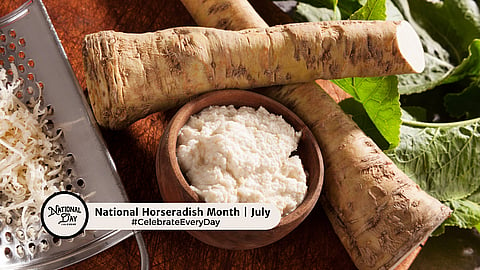
NATIONAL HORSERADISH MONTH
National Horseradish Month in July gives us an opportunity to learn about the root vegetable that adds a kick to meat and side dishes.
#NationalHorseradishMonth
Edible from leaves to root tip, the horseradish is native to eastern Europe. Historically, the root's medicinal uses included treatments for pain relief, food poisoning, scurvy, and colic. It was even considered an aphrodisiac at one time.
Horseradish, along with vegetables such as kale and cauliflower, is a member of the mustard family. While often made into a condiment or sauce, it also makes an excellent seasoning. The flavorful root vegetable adds a spicy punch to savory dishes and can even be added to some beverages like a Bloody Mary or Caesar.
The heat from horseradish comes from a compound called isothiocyanate. Horseradish is at its most aromatic and spiciest when it is raw. Adding vinegar to a recipe will help create a milder heat and bring about a less pungent bite.
Commercial cultivation of horseradish started in the mid-1850s when immigrants started horseradish farms in the Midwestern part of the U.S.. By the late 1890s, a thriving horseradish industry. Today, nearly 6 million gallons of prepared horseradish are produced annually in the U.S.
CELEBRATING #NationalHorseradishMonth
Add some horseradish to your meals in July. Whether you're grilling (it is National Grilling Month) or whipping something up in the kitchen, try prepared horseradish or a powered version. If you have fresh horseradish, consider preserving it for use later in the year. Use #NationalHorseradishMonth to share on social media.
NATIONAL HORSERADISH MONTH HISTORY
National Day Calendar is researching the origins of this month-long food celebration. However, the observance has taken place since at least 2006.