NATIONAL MULE DAY
NATIONAL MULE DAY
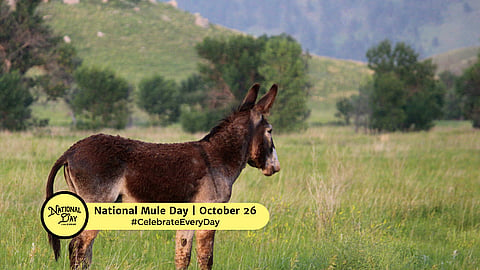
On October 26th, National Mule Day recognizes a strong, intelligent, and hardworking animal that is too often mistaken for being stubborn. We are taking an entire day to celebrate this incredible hybrid that has played a vital role in building nations.
#NationalMuleDay
A mule is a hybrid cross between a male donkey (jack) and a female horse. As a hybrid, the animal inherits characteristics from both parents. The mule possesses the strength, intelligence, patience, perseverance, endurance, sure-footedness, and even temper of the donkey. From the horse, the mule inherits beauty, athletic ability, courage, vigor, and speed. In addition, mules appear to require less food than a horse of similar size.
Mules have an unfair reputation for being "stubborn." This is one of history's great misunderstandings! What humans interpret as stubbornness is actually a mule's highly developed sense of self-preservation and intelligence. A mule won't willingly put itself in danger, which is why they are so trusted on treacherous mountain trails. They're not being difficult; they're being careful!
Mule Moments
We've gathered a couple of mule tidbits for your to think about, thanks to the American Mule Museum:
- Early explorers brought donkeys to America, but they were quite small.
- George Washington played a significant role in the development of the mule population in America. He recognized the value of the sturdy animal in agriculture and became the first American breeder.
- Washington wished to breed the very best mules, but he faced a significant obstacle – the Spanish government at that time prohibited the acquisition or exportation of the famous Andalusian donkey. So Washington wrote to King Charles of Spain requesting permission to purchase good quality breeding stock. In October of 1785, a ship docked in Boston harbor carrying a gift from King Charles for George Washington – two fine jennies and a 4-year old Spanish jack named, appropriately, "Royal Gift'. That royal gift from the Spanish king is credited with the development of the American mule. Today it's considered the beginning of a dynasty that "reshaped the very landscape of the country."
HOW TO OBSERVE NATIONAL MULE DAY
If you're ready to celebrate this amazing animal, here are some fun ways to get involved:
- Learn about a legendary mule. Read the classic children's book "Brighty of the Grand Canyon" by Marguerite Henry, which tells the story of a real-life, free-roaming mule.
- Watch a classic western. Many old Westerns feature mules as the trusty pack animals carrying supplies through rugged terrain. See how many you can spot!
- Visit a farm or zoo. There is no better place to see these incredible animals up close to truly appreciate their unique look and calm demeanor.
- Share fun facts, pictures, or your appreciation for mules on social media using the hashtag #NationalMuleDay to post on social media!
NATIONAL MULE DAY HISTORY
National Day Calendar® continues to research the origins of the hybrid holiday.
Mule FAQ
Q. How many chromosomes does a mule have?
A. A mule has 63 chromosomes. Its mother (horse) has 64, and the father (donkey) has 62. Due to the odd number of chromosomes, the hybrid cannot breed.
Q. What is a female donkey called?
A. Female donkey is called a jenny.
Q. What are the hybrid of a male horse and a female donkey called?
A. The hybrid of a male horse and female donkey is called a hinny, but it's still a mule.
Q. Are mules the only hybrid animal that exists?
A. No. There are several hybrids around the world. Hybridization happens in birds, fish, mammals, and even reptiles. Some hybrids include:
- Grolar bear - offspring of a grizzly bear and a polar bear
- Cama - offspring of camel and lama
- Dzo - offspring of domestic cattle and yak
- Geep - offspring of a goat and a sheep
- Zorse - offspring of a zebra and a horse
Q. Does hybridization occur without artificial intervention?
A. Yes and no. Many factors play a role in hybridization, whether it occurs in the wild or captivity. Some hybrids only exist due to artificial methods, though, and have never occurred outside of captivity. For example, the grolar mentioned above happens more often in the wild, but the changing environments of the grizzly bear and polar bear made it possible. Sometimes, circumstances leave two species with few options for mating - captivity, for example. One instance includes a male jaguar and female lion mating while in captivity. The resulting offspring were two cubs called a jaglion.