NATIONAL TRADING CARD DAY
NATIONAL TRADING CARD DAY
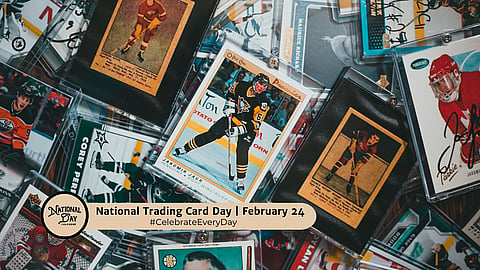
Today is February 24 and National Trading Card Day! We’re not just talking about sports, we're also talking about the thrill of the rip (if you know, you know), the art of the trade, and that specific smell of a fresh pack of cards. Our question is: When was the last time you held a piece of cardboard that made you feel like a kid?
#NATIONALTRADINGCARDDAY
Trading cards have been around for a very, very long time. The oldest known trading card seems to be a sports trading card of the Brooklyn Atlantic team in 1860. It was in the form of a small photo on cardstock and featured the entire team. It's time to pull those dusty binders out of the closet, reorganize your top-loaders, and remember why we started collecting in the first place.
Trading cards are more than just a piece of cardboard. Sure, to an outsider, it may look like a picture on a piece of paper. But, to someone who has spent their life collecting their favorite baseball player, trading cards represent our favorite legends, our childhood hobbies, and a serious investment for some.
Rare Trading Cards
Building a "Rare Card" list is like looking at a museum of pop culture. Some cards are rare because of a printing mistake, others are rare because a legendary player only signed a few, and some simply because they survived 100 years in a shoebox in the back of a closet. Here are the three things that make a trading card rare:
The "Error" Card: When the company notices an error after the first few thousand "bricks" have been printed and shipped. Because the first batch was already in the mail, both versions end up on store shelves at the same time.
The "Condition" Rarity: A card might have 10,000 copies, but if only 3 of them are perfectly centered with no white edges, those 3 become "condition rare" and worth a fortune.
The "Serial Number": Modern cards are often stamped with numbers. This is "manufactured rarity," where the company guarantees they will never print more than that specific amount. The rarity of serial numbered cards occur when a company prints 30 stamped copies of a card and you have 4/30. This indicates you have the fourth stamped card printed of only 30 copies stamped.
NATIONAL TRADING CARD DAY CELEBRATIONS
You don't need a high-value trading card to join in the fun of collecting them. This day is all about enjoying the hobby of collecting. But, if you do find a rare trading card...good on you! Here is what you can do to join in the nostalgia of collecting trading cards:
Go to your local hobby shop and buy a ripper pack of cards. For those who don't know, a ripper pack is simply enjoying the reveal of the card package to see what you have inside!
Dig out your old dusty box of trading cards. Spend an hour re-sorting to rediscover cards you forgot you had. Who knows! Maybe you will find a rare one with some serious value!
Take a photo of your most valuable card and share with your family and friends. You might find other family members have their own box of cards they want to share.
Talk to your kids about trading card collection to keep the hobby of collecting alive. You might be surprised to learn they collect cards, too.
Be sure to use #NationalTradingCardDay on social media so we can all geek out over your collection together!
CREATION OF NATIONAL TRADING CARD DAY
National Trading Card Day emerged during a time of big transitions for the hobby. In 2004, the five giants of the industry—Donruss-Playoff, Fleer, Press Pass, Topps, and Upper Deck—did something rarely seen: they teamed up. In hopes of sparking new interest, they created a special 53-card multi-sport set specifically for the day. This unified set was a message to fans that trading cards weren't just about a single sport; they were a celebration of history and competition across the board, from the baseball diamond to the NASCAR track.