NATIONAL TRIGEMINAL NEURALGIA AWARENESS DAY
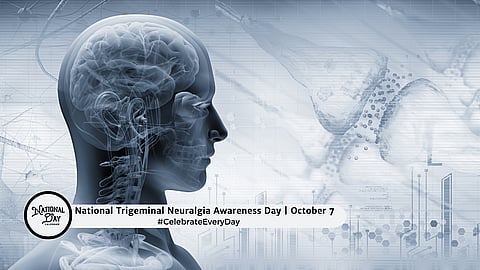
NATIONAL TRIGEMINAL NEURALGIA AWARENESS DAY
On October 7th, we observe National Trigeminal Neuralgia Awareness Day. This awareness day is dedicated to shedding light on a debilitating nerve condition, fostering a community of support for those affected, and championing the research that leads to better treatments and, ultimately, a cure.
#TrigeminalNeuralgiaAwarenessDay
Trigeminal Neuralgia is a chronic pain condition affecting the trigeminal nerve. This is the largest of the 12 cranial nerves and is responsible for transmitting sensations from the face to the brain.
TN can affect one, two, or all three branches. The most common cause is a blood vessel pressing on the trigeminal nerve at the base of the brain (vascular compression). Other causes can include aging, Multiple Sclerosis (MS), or other conditions that damage the protective myelin sheath around the nerve. In some cases, injury or stroke can also be a factor. The trigeminal nerve has three main branches:
The Ophthalmic Nerve - Controls sensation in the eye, upper eyelid, and forehead.
The Maxillary Nerve - Affects the lower eyelid, cheek, nostril, upper lip, and upper gum.
The Mandibular Nerve - Runs to the jaw, lower lip, lower gum, and some muscles used for chewing.
Those with trigeminal neuralgia may experience severe pain in the face and jaw. Even slight stimulation can trigger pain. The pain can be shooting or jabbing. Before an episode begins, some sufferers experience a burning sensation. The pain may be localized or spread and may worsen over time. It can also last a few minutes or days.
A Journey Toward Relief
While living with Trigeminal Neuralgia presents significant challenges, there is a growing landscape of hope and effective treatments. The journey to relief is a partnership between patients and their medical teams. Rather than being a progressive condition without solutions, it is a manageable one with an expanding arsenal of options.
Medications are the first line of treatment and often include anticonvulsant medications, which can calm the nerve signals and significantly reduce or stop the pain. Surgical Procedures may be necessary if medication is not effective or causes intolerable side effects, several highly effective surgical options are available.
HOW TO OBSERVE TRIGEMINAL NEURALGIA AWARENESS DAY
National Trigeminal Neuralgia Awareness Day is a call to action for everyone. Here’s how you can participate:
Wear Teal to Show Solidarity: Teal is the official color for trigeminal Neuralgia Awareness. Wearing a teal ribbon or clothing is a simple yet powerful way to show your support for the warriors fighting this condition.
Educate and Advocate: Share information about Trigeminal Neuralgia with your friends, family, and social networks. Increased public understanding helps reduce stigma and can lead to earlier diagnosis and better care.
Support Research: Consider donating to or fundraising for organizations dedicated to Trigeminal Neuralgia research. Every contribution helps pave the way for a future free from this pain.
Share Stories of Hope: If you or someone you know has a story of managing Trigeminal Neuralgia, share it. These stories are vital for newly diagnosed patients, reminding them that they are not alone and that relief is possible.
Show your suppose on social media using the hashtag #TrigeminalNeuralgiaAwarenessDay to join the global conversation.
NATIONAL TRIGEMINAL NEURALGIA AWARENESS DAY
In 2017, the House of Representatives passed House Resolution 558 naming October 7th National Trigeminal Neuralgia Awareness Day. The resolution calls for action by individuals across the country and acknowledgment of those striving to promote research and treatments.