NATIONAL UTAH DAY
NATIONAL UTAH DAY
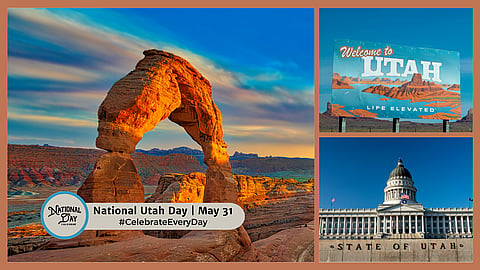
On May 31, we celebrate The Beehive State on National Utah Day! This initiative is our way of honoring each state in the order they joined the Union, offering a dedicated day to celebrate the unique heritage, achievements, and spirit of each state.
#NationalUtahDay
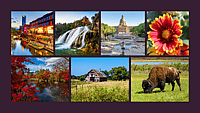
Utah became the 45th state on January 4, 1896. This vast state is home to The Great Salt Lake, a deeply rooted Native American heritage, and a far-reaching desert history.
Traveling Utah means traveling in the footsteps of Utah’s namesake, the Utes, or the Shoshone, Navajo or Goshute. Or, if you prefer, you could follow the trails of early explorers or Mormon settlers. They all lived among the natural arches and bridges formed long ago. These architectural wonders of nature are a cornerstone of Utah.
You can find treasure everywhere you look while visiting Utah. From the sunrise to the spiraling cliffs to the bejeweled night sky. You will definitely catch an unobstructed view of the Milky Way for miles. Since Utah has significantly less light pollution, night star viewing is spectacular presenting ample opportunity to catch multiple meteor showers.
Home of land speed records and a barren environment, the salt flats were once part of a much larger lake. In fact, you can discover why some still believe the world flat by visiting Bonneville Salt Flats.
Famous People From Utah
Chief Pocatello led the Northwestern Shoshones during Mormon and western settlement. During this time, food sources became scarce due to the increased activity and population. Pocatello’s band would raid settlers for food, though the Mormons would peacefully provide relief. Other settlers would call in troops, which eventually led to violence, a treaty, and removal to the Fort Hall Reservation.
Chief Hoskininni became a legend for avoiding capture during a scorched earth campaign led by Kit Carson. Chief Hoskininni led his family into the remote wilderness of Monument Valley near Navajo Mountain. When the military released the Navajo from prison several years later, Hoskinnini and his family came out of hiding.
Florence Ellinwood Allen became the first woman in the United States elected to a judicial office on November 2, 1920. She was elected to the judgeship of the Cuyahoga County Court of Common Pleas. But she wouldn’t stop there. In 1934, President Franklin D. Roosevelt nominated her for the U.S. Sixth Circuit Court of Appeals for which the U.S. Senate unanimously approved. Allen became the first woman appointed and confirmed to a federal appeals court judgeship.
Harvey Fletcher was a physicist known for his research and development of electronics. Credited with inventing the hearing aid, Fletcher's innovations advanced the telephone, radio and television industries.
Traffic Sergeant Lester Wire invented the first electric traffic signal to resolve the congestion in the streets of Salt Lake City. His birdhouse-shaped signal light called a semaphore and had red and green lights directing traffic which were manually operated during peak times. Wire never patented his invention but because he was the Traffic Sergeant of the Salt Lake City Police Department, there is plenty of documentation proving his invention. Wire enlisted in the Ambulance Corps during World War I and went on to become a detective with the Salt Lake Police Department.
High jumper, Alma Richards, earned Utah’s first Olympic gold medal during the 1912 Stockholm Olympic Games. Richards would go on to become a decathlete and compete in the 1915 AAU championships.
Natacha Rambova was born Winifred Kimball Shaughnessy. As a costume and set designer, Rambova’s vision and quality were under-credited. A woman before her time, Rambova fell into the shadows of her husbands, Theodore Kosloff and Rudolph Valentino.
Frank Zamboni was the type of person who didn’t give up. As the inventor of the Zamboni ice-resurfacing machine, he went through four different prototypes before submitting his first design for a patent. After being awarded the patent, Zamboni continued to perfect the design to create the smoothest ice for skaters. Today, the modern-day Zambonis make glass-like surfaces for rinks around the world.
Philo Farnsworth is credited with producing the first electronic image via television. Sadly, he would spend years in legal battles defending his accomplishment. Interestingly, Farnsworth wouldn't let his legal battles deter him from invention other things. This talented scientist went on to make advancements in radio, television and telephone systems.
Biographer, Fawn M. Brodie, first broached the founder of her former religion in No Man Knows My History: The Life of Joseph Smith. Brodie would continue to tackle notable subjects throughout her career such as Thomas Jefferson: An Intimate History and Richard Nixon: The Shaping of HIs Character.
Nolan Bushnell kick started an industry with a simple array of pixels bouncing a digital ball between paddles. Inventor of the first computerized video game, Bushnell imagination led him to the founding of Atari and a home video gaming obsession that creates graphic novels, films and much more in the realm of science fiction.
Marie Osmond gained success in the 1970s and 1980s as a solo country music artist. Alongside her brother, Donny Osmond, she hosted the television show, Donny & Marie.
HOW TO OBSERVE NATIONAL UTAH DAY
Join National Day Calendar as we celebrate the 45th state to join the union. Explore the history and people of Utah. Follow the trails of the pioneers and discover a wealth of heritage in one place. Use #NationalUtahDay to share on social media.
HISTORY BEHIND NATIONAL UTAH DAY
National Utah Day was founded in 2017 by National Day Calendar® to celebrate Utah as the 45th state to join the Union. Utah officially celebrates its statehood on January 4th. However, National Day Calendar is committed to celebrating every aspect of our nation's diverse culture and history, which is why we proudly introduced National State Days. This initiative is our way of honoring each state in the order they joined the Union, offering a dedicated day to celebrate the unique heritage, achievements, and spirit of each state.