
WHITE CANE SAFETY DAY
WHITE CANE SAFETY DAY
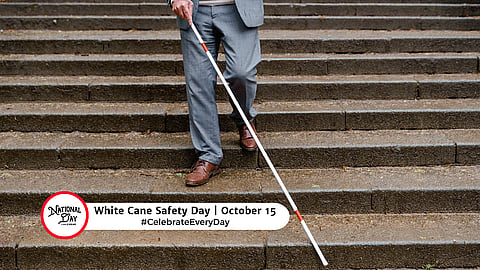
National White Cane Safety Day on October 15th honors the independence, achievements, and rights of people who are blind or visually impaired. More than just a day of recognition, it is a call for public awareness, reminding everyone that the white cane is both a vital tool for mobility and a powerful symbol of freedom.
#WhiteCaneSafetyDay
For its user, the white cane is a critical extension of their senses. A skilled individual can use it to navigate steps, detect obstacles, and identify changes in texture on the ground, allowing for safe and confident travel in their community. While technology continues to evolve, the white cane remains a fundamental tool for leading an independent life.
Beyond its practical function, the white cane is a universally recognized signal to the public. It alerts drivers and pedestrians to be aware and cautious. This symbol is so important that all 50 states have "White Cane Laws" that require drivers to yield the right-of-way to individuals using a white cane. It is a declaration of the user's right to navigate the world safely and on their own terms.
5 TIPS TO HELP CELEBRATE WHITE CANE USERS
Observing this day is about more than awareness; it's about action. There are practical ways to ensure safety and show respect for white cane users every day:
- Always yield the right-of-way to pedestrians using a white cane or guide dog. Stop your vehicle well before the crosswalk to give them ample space to cross safely.
- Never push, pull, or grab a person's arm or their cane. Be respectful if you believe someone needs help. Ask, "Would you like any assistance?" Be prepared to listen to their response and accept "no" as an answer.
- In workplaces, stores, and on sidewalks, ensure that hallways and aisles are free from clutter, boxes, and other obstacles that could create a hazard.
- If giving directions, be precise. Say "the door is on your left," rather than pointing and saying "it's over there."
- Use your platform to educate others about white cane safety and the meaning of the day. Use #WhiteCaneSafetyDay to join the conversation online.
NATIONAL WHITE CANE SAFETY DAY HISTORY
The movement to recognize white cane safety was formalized on October 6, 1964, when a joint resolution of Congress was signed into law, authorizing the President of the United States to proclaim October 15th as White Cane Safety Day. President Lyndon B. Johnson signed the first proclamation that year.
In 2011, the day was also named Blind Americans Equality Day by President Barack Obama, further emphasizing the day's message of independence and equal opportunity. To learn more about advocacy and resources, visit the National Federation of the Blind, a leading organization in the movement.
White Cane FAQ
Q. Besides a cane, what other tools do those who are blind utilize?
A. Those with blindness access several tools and resources that improve their independence. For example:
- Guide dogs - These specially-trained dogs respond to commands and recognize obstacles for someone with limited sight.
- Braille - The braille alphabet is read using the tips of our fingers and allows those with limited sight to read books, menus, directions, and more.
- Screen readers - These browser tools allow those with blindness to access websites.