
WILD FOODS DAY
WILD FOODS DAY
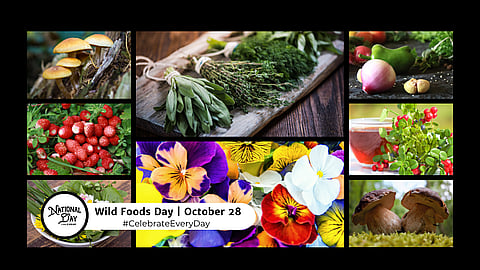
Wild Foods Day on October 28th is the annual celebration to encourage people to explore foraging for food found the wild. This day inspires us to learn about the traditional gathering of food, how to identify wild edibles, and how to safely prepare food for consumption.
#WildFoodDay
We rarely think about food found in the wild in this digital age. In fact, unless you are living off the land, it's not something we consider to be a part of our daily routines because running to the grocery store or local market conveniently provides our food needs. But, what if we rekindled that close relationship with nature our grandparents and ancestors had before us? It’s possible, even if you live in an urban environment.
Humans have been harvesting food from the wild for thousands of years by hunting, fishing, and gathering wild edibles like plants, berries, and seeds. Though we have the convenience of food at our disposal, most of us lack the ability to truly forage for ourselves. Over the past few decades, a rising interest in eating more sustainable food has sparked a renewed passion for foraging. Wild plants often appear on menus in gourmet restaurants and raw food restaurants, increasing the appeal of incorporating more wild food into our diets.
Wild Food Benefits
Wild foods are free of harmful preservatives and pesticides, making eating them a part of an eco-friendly lifestyle. This is especially true when it comes to eliminating harsh chemicals found in many food items we purchase today. Wild plants are often more nutrient-dense, containing higher levels of vitamins, minerals, and antioxidants.
Wild Foods Day celebrates the diversity and richness of food sources available in the natural environment, supporting sustainability through foraging, encouraging a closer relationship with our environment, and highlighting the importance of conservation and respect for natural habitats. Whether it’s your first time, or you’re a seasoned forager, Wild Foods Day is the perfect occasion to explore nature’s kitchen.
Wild food has a near-zero carbon footprint and is not harmful to the environment when harvested responsibly. As you learn about wild foods, you're also gaining a deeper understanding of the ecosystem around you. This, in turn, often increases your appreciation for the environment. Plus, there is a huge benefit to your own mental health after being outside and connecting with nature.
When foraging for wild food, safety is key. You need to be 100% certain of what you are picking. Never eat anything you cannot identify, because many edible plants have toxic or deadly look-alikes. For example, wild carrots look very similar to poison hemlock. Your best bet is to use reliable field guides and, ideally, learn directly from an experienced forager. There are also many books and online resources available to for study to help you along with identifying safe wild food.
5 WAYS TO CELEBRATE WILD FOODS DAY
Celebrating Wild Foods Day can be a fun and educational experience, and you don't even have to be an expert forager to participate. Here are some ways to get involved.
Watch foraging documentaries or YouTube channels to see what experts gather and how they cook with it.
Visit a farmers market in your area and look for vendors who sell wild foods like mushrooms, wild berries or plants.
Begin your foraging adventure in your own backyard! Dandelions, stinging nettles, pine needles, and some weeds are edible wild foods and easy to cook for beginners.
The best (and safest) way to learn about wild food is to take a guided walk or local foraging class. Naturalists and herbalists often have the best knowledge about wild food and can teach you how to forage properly.
Plan a full meal around foraged or wild ingredients. Making a wild berry jam, a mushroom risotto, or a salad from wild greens will be the reward for your foraging adventure!
HISTORY BEHIND WILD FOODS DAY
Wild Foods Day seems to have appeared in the media around 1974, largely inspired by Euell Gibbons, a wild food enthusiast who debuted his book Stalking the Wild Asparagus in 1962. His book served as a guide on how to identify, gather, and prepare edible wild plants based on his own personal experiences. Gibbons is credited with popularizing the "back-to-nature" movement for the American public, reintroducing the practice of foraging for wild plants.